
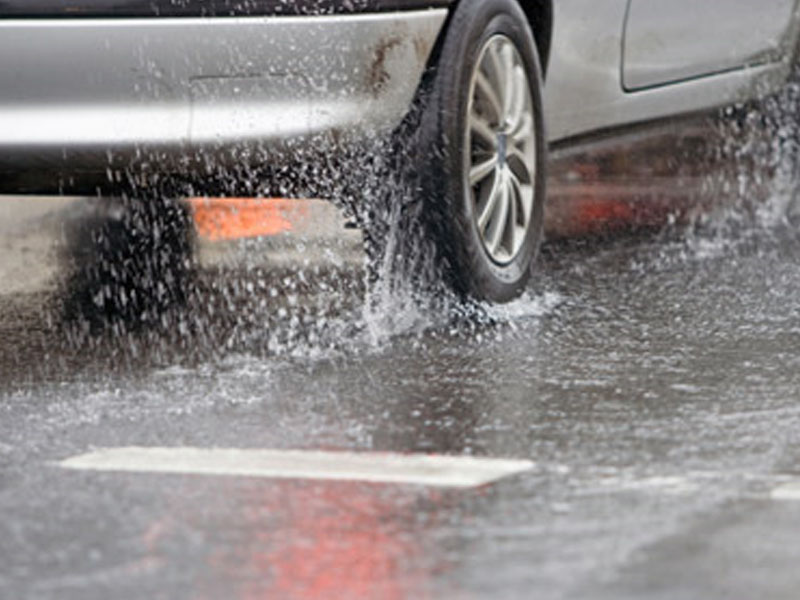
If your vehicle's brakes become wet, you should be aware that...
- A)The brakes will stop the vehicle in a shorter distance.
- B)The brakes may temporarily lose their effectiveness or even stop working.✓ Correct answer
- C)The brakes will be damaged and the brake pads will need replacing.
Why this is the correct answer
When brakes get wet (e.g. after driving through a flooded stretch of road or under heavy rain), water forms a thin film between the brake pads and the discs (or shoes and drums). This significantly reduces friction, which means braking force decreases — and in some cases, the brakes may temporarily fail to work at all. This is a TEMPORARY effect: the brakes are not damaged. To restore braking effectiveness, gently and repeatedly press the brake pedal while driving at low speed. The heat generated by the friction between the pads and discs will evaporate the moisture and the brakes will return to normal. Option A is wrong because wet brakes increase stopping distance, not decrease it. Option C is wrong because getting wet does not permanently damage the brakes or require pad replacement.
More questions about vehicle mechanics
- as a general guideline, what pressure should you maintain your vehicle’s spare tyre at?
- Using petrol with a lower octane rating than that recommended by the manufacturer...
- Are you required to perform any maintenance on the vehicle battery charging circuit?
- Is it allowed to fit tyres with a different speed rating than the one recommended by the manufacturer?