
In a head-on collision, under what circumstances is a driver most likely to sustain a traumatic brain injury when their head strikes the windscreen?
- A)When their body slides downward and beneath the steering wheel.
- B)When the collision speed is minimal and the body barely moves.
- C)When their body moves upward and over the steering wheel.✓ Correct answer
Why this is the correct answer
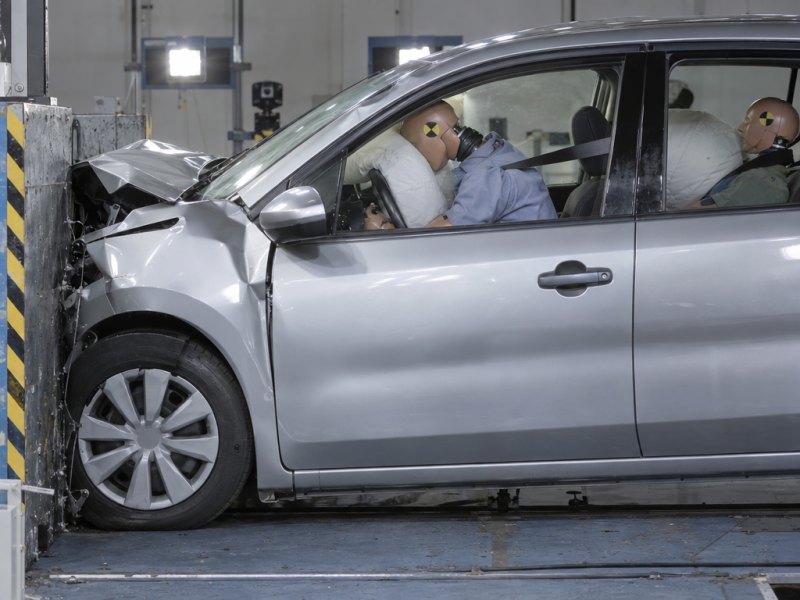
In a head-on collision, the driver's body can be projected in two main directions due to inertia: downward (sliding beneath the steering wheel, known as the "submarine effect") or upward (moving over the steering wheel). When the body moves upward and over the steering wheel (answer C), the head is projected directly toward the windscreen, its metal frame, or the rearview mirror — all hard surfaces. This trajectory produces the greatest risk of traumatic brain injury (TBI), as the head absorbs the full force of the impact against these rigid structures. By contrast, the downward or "submarine" trajectory (answer A) mainly causes injuries to the knees, hips, abdomen and lower spine, not primarily head-to-windscreen impact. Answer B is also incorrect because at very low speeds, the body barely moves forward, so significant head impact does not occur.
More questions about accidents & emergency
- Due to the risk compensation phenomenon, how might a driver behave?
- To recall the basic steps to follow in an accident, the P.A.S. rule is used. What does this acronym represent?
- Must you yield to a fire service vehicle that is using only its special flashing light (without the siren)?
- If a driver is ejected from a vehicle during an accident, what term describes the mechanism of injury associated with the impact against the ground?