When a vertical sign contradicts a fixed beacon, which one takes precedence?
- A)The vertical sign takes precedence.
- B)The fixed beacon takes precedence.✓ Correct answer
- C)The more restrictive signal takes precedence.
Why this is the correct answer
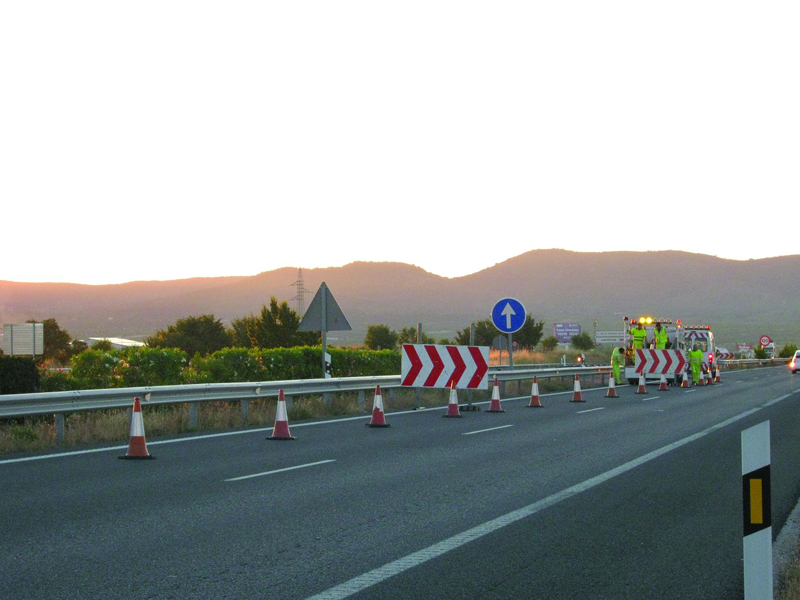
In Spain, all traffic signals are ranked in a strict priority order (from highest to lowest): 1. Traffic officers (their gestures or instructions override everything else). 2. Circumstantial signals and fixed beacons (cones, chevron panels, bollards, road studs, barriers, etc.). 3. Traffic lights. 4. Vertical signs (signs on posts, such as stop, speed limits, or mandatory direction signs). 5. Road markings (lines, arrows, and symbols painted on the road surface). When two signals from different levels contradict each other, you must always obey the one with the higher priority. Since fixed beacons (level 2) rank higher than vertical signs (level 4), the beacon always takes precedence. A "fixed beacon" (balizamiento fijo) is any permanent or semi-permanent device placed on or beside the road to guide traffic, warn of hazards, or restrict movement. Common examples include: chevron panels (red-and-white striped boards), traffic cones, bollards, guardrail reflectors, road studs (cat's eyes), and fixed barriers. In the image you can see a real example: cones and chevron panels (beacons) coexist with a blue mandatory-direction vertical sign. If the beacons indicate a path that conflicts with the vertical sign, you must follow the beacons. This hierarchy exists because beacons are placed to address specific, often urgent conditions on the road (roadworks, accidents, hazards), so they must override permanent signage.
More questions about traffic signs & signals
- The driver of the red vehicle intends to go straight on. The main traffic light is red and the auxiliary light shows a green right-turn arrow. Should the red vehicle move forward so as not to block the blue vehicle behind, which wants to turn right?
- The reversible lane on your left is open to traffic coming towards you, and the signal above it shows a red X. Are you allowed to cross the double broken line on your left to overtake?
- The yellow car in the picture is stopped because its driver wants to go straight ahead. According to the signage, what should it do?
- At the sign depicted in the image, what must you do?