
How does LSD affect driving?
- A)Abilities are overestimated.
- B)It increases feelings of fatigue and drowsiness.
- C)Hallucinations and emotional disturbances may occur.✓ Correct answer
Why this is the correct answer
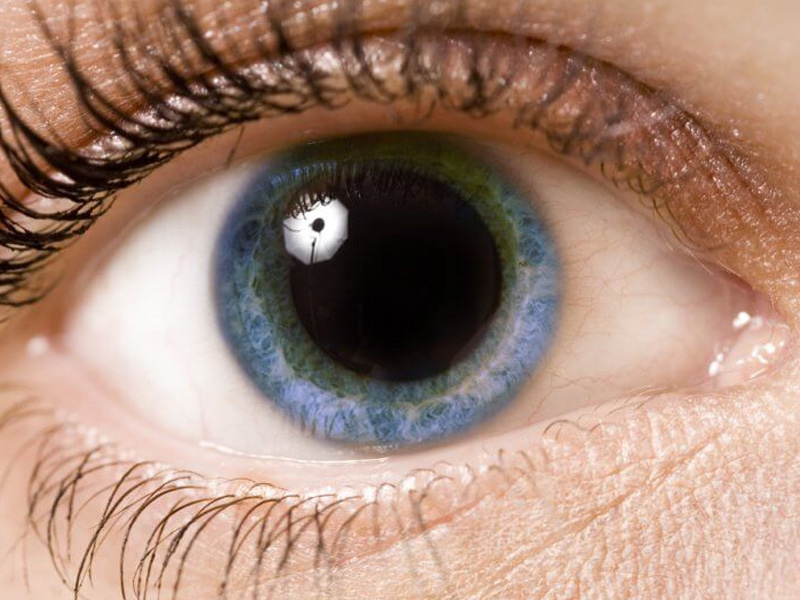
LSD (Lysergic Acid Diethylamide) is a very powerful hallucinogenic drug, classified as a "disruptive" substance. Unlike depressant drugs (which cause drowsiness) or stimulant drugs (which cause overconfidence), LSD profoundly alters brain function, causing: strong visual and auditory hallucinations, severe emotional disturbances (anxiety, panic, even aggression), distorted perception of space, time and speed, loss of motor coordination, and impaired decision-making. Its effects typically last 10–12 hours and it can also cause "flashbacks" — sudden re-experiences of hallucinations days or weeks after consumption. Option A is incorrect because overestimation of abilities is mainly associated with stimulant drugs like cocaine. Option B is incorrect because fatigue and drowsiness are effects of depressant drugs (e.g. alcohol, opioids). Option C is correct: the defining danger of LSD for driving is hallucinations and emotional disturbances. The image shows an eye with a heavily dilated pupil (mydriasis), which is a characteristic physical sign of LSD use.
More questions about road safety & behaviour
- What is the generic speed limit for a car on a road like the one in the picture (a dual carriageway, with a central barrier and two lanes in each direction)?
- On a road with no usable pedestrian area, which of these people must always keep to the right and obey traffic officers and traffic signs?
- Can informal learning to drive, such as observing other drivers, negatively impact other forms of learning?
- What is the maximum speed you cannot exceed when driving an adaptable mixed vehicle on a motorway?