
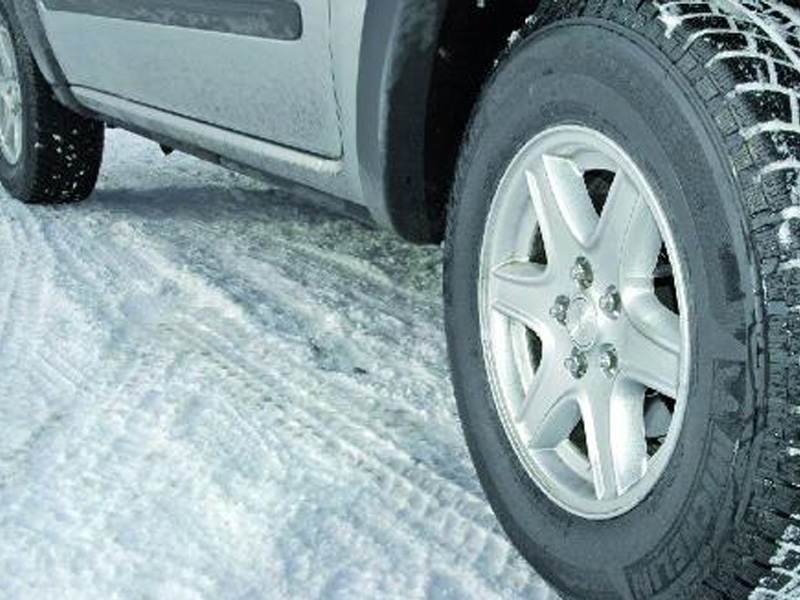
During the day, you are driving your vehicle and notice light snow, so you turn on the dipped headlights and position lights. Do you believe you have activated the correct lights?
- A)No, I must mandatorily turn on the front fog lights.
- B)Yes, but I can also turn on the front fog lights.✓ Correct answer
- C)No, I must mandatorily turn on the long-range or main beam headlights.
Why this is the correct answer
When it is snowing and visibility is reduced, you must switch on your lights. You must use the front fog lights, the dipped headlights or the main beam headlights; the position lights must also be on. The front fog lights can be used on their own or together with the dipped headlights, or even with the main beam headlights. Dipped headlights with position lights are therefore a correct choice, and you may also switch on the front fog lights, but they are not compulsory. Option A is wrong because the front fog lights are optional, not compulsory. Option C is wrong because the main beam headlights are not compulsory either: they are only one of the permitted options, and you must switch them to dipped headlights whenever you could dazzle other road users. Quick guide to the lights mentioned: position lights are small, low-intensity lights that show your vehicle's presence and width but do not light up the road; dipped headlights are the normal headlights used at night or in poor visibility, which light the road ahead without dazzling other drivers; front fog lights are lights mounted low on the front of the car that help in fog, heavy rain or snow.
More questions about driving types & techniques
- The reaction distance is the distance covered by the vehicle...
- When turning left at this intersection, where should the centre of the intersection be in relation to your vehicle?
- You are driving during the day and it starts to rain torrentially, severely reducing visibility, as shown in the image. Must you turn on the rear fog lights?
- Which type of road has the highest accident risk?